
When you see new slang in a chat, it can feel confusing. Many people use short words and acronyms while texting every day. One common term is IDM. It appears in messages, social media comments, and online conversations.
If you are wondering what does idm mean in text, it usually means “I Don’t Mind.” People use it when they are okay with a choice or have no strong preference. It shows a flexible and easygoing attitude. However, IDM can have different meanings depending on the situation. This guide explains its uses, examples, and how to understand its tone in modern digital communication. You will also learn where IDM fits in casual chats and other online spaces.
What Does IDM Mean in Text?
Simple Definition
When people search what does idm mean in text, they usually want a quick answer. IDM commonly stands for “I Don’t Mind.”
It means a person has no problem with a choice or suggestion. They are saying they are okay with whatever happens.
For example:
Person 1: “Do you want pizza or burgers?”
Person 2: “IDM.”
Here, IDM means:
- “Either one is fine.”
- “You can choose.”
- “I have no preference.”
IDM is one of many text acronyms used in online messaging. People use it to save time and keep conversations short.
It appears often in:
- Text messages
- Messaging apps
- Social media chats
- Casual texting
However, the meaning can change depending on the conversation. Context always matters when understanding digital language.
Tone and Intent
The tone behind IDM is usually friendly and relaxed. It often shows an agreeable tone rather than a strong opinion.
When someone writes IDM, they normally want to show:
- A flexible response
- An easygoing attitude
- No preference
- Willingness to accept another person’s choice
For example:
Friend: “Should we watch a comedy or an action movie?”
Reply: “IDM, you pick.”
This sounds positive because the person is open to both options.
However, text message tone can sometimes be misunderstood. A short reply like “IDM” may feel cold if the conversation lacks emotion.
Compare:
Friendly:
“IDM 😊 Pick whatever you like.”
Neutral:
“IDM.”
The first message feels warmer. The second one feels more direct.
That is why text tone interpretation is important in digital communication.
Why Is IDM Popular in Texting?
IDM became popular because modern conversations focus on speed and simplicity. People often use shortened expressions to communicate faster.
Online messaging has changed how people talk. Instead of typing full sentences, users rely on texting abbreviations to share ideas quickly.
Examples include:
- IDM = I Don’t Mind
- IDC = I Don’t Care
- NP = No Problem
- YW = You’re Welcome
- OK = Okay
These shortcuts make conversations easier, especially when people are chatting casually.
IDM is popular because it gives a simple answer without creating extra discussion.
For example:
Friend: “Where should we meet?”
Reply: “IDM.”
The person is saying:
- “I’m flexible.”
- “You decide.”
- “Any place works.”
You will often see IDM in:
- Casual conversations
- Online chat etiquette
- Social media messages
- Group discussions
It matches the fast style of modern communication trends.
Read More: Fein Meaning: Complete Breakdown of Viral Internet Slang 2026
How IDM Is Used in Everyday Conversations
IDM works best when someone does not have a strong choice. It helps keep conversations moving without making decisions difficult.
People use it when they want to show flexibility.
Common situations include:
- Choosing a restaurant
- Planning activities
- Picking a meeting time
- Selecting entertainment
- Making simple decisions
Casual Examples
Example 1: Choosing Food
Person A: “Should we order noodles or pizza?”
Person B: “IDM, both sound good.”
Meaning:
“I don’t mind. I’m okay with either option.”
Example 2: Making Plans
Friend: “Do you want to meet today or tomorrow?”
Reply: “IDM. Whenever works for you.”
The person does not have a fixed preference.
Example 3: Group Decision
Person A: “Which game should we play?”
Person B: “IDM, choose one.”
This shows a relaxed and cooperative attitude.
IDM works well in friendly conversations because it keeps communication simple. However, it may not fit situations where you need to clearly share your opinion.
For important decisions, a more detailed response creates better communication.
Different Contexts Where IDM Appears
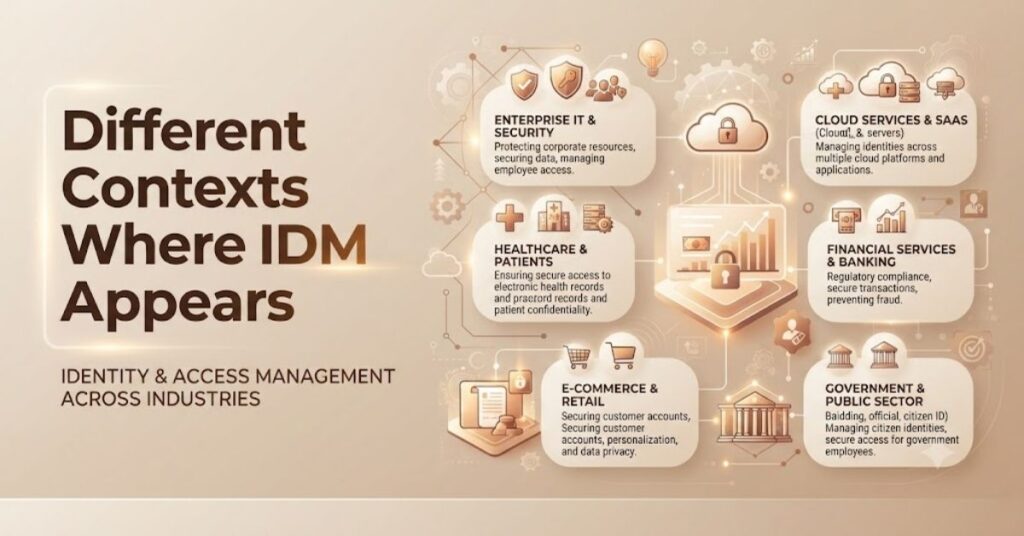
IDM can appear in many places because people use short forms across different online platforms. The meaning usually stays the same, but the situation changes how people understand it.
The most common places include:
- Private chats
- Social media comments
- Group conversations
- Dating messages
- Workplace chats
Understanding the context-based meaning helps you avoid confusion.
1. Text Messages and Chats
In regular text messages, IDM almost always means “I Don’t Mind.”
Friends and family often use it during simple conversations.
Example:
A: “What time should we call?”
B: “IDM. Anytime is okay.”
Here, IDM shows a neutral tone. The person is not refusing or ignoring the question.
They simply do not have a preference.
In casual texting, IDM helps people answer quickly while keeping conversations friendly.
2. Social Media Comments
IDM can also appear in social media comments and replies.
Platforms like Instagram comments, Twitter (X) usage, and other messaging apps encourage short responses.
Example:
Comment: “Should I upload the black outfit or the blue one?”
Reply: “IDM. Both look great.”
The user means:
- Both options are acceptable.
- They do not want to choose.
- They support the other person’s decision.
Social media encourages brevity in messaging, which makes acronyms like IDM common.
3. Group Chats
Group chats often include quick decisions. People use IDM when they want to avoid slowing down the conversation.
In a group chat, everyone may have different opinions. IDM helps someone show that they are flexible.
For example:
Alex: “Where should we go this weekend?”
Sara: “IDM.”
Mike: “Let’s try the new cafe.”
Here, Sara does not reject the idea. She simply lets others decide.
Common group chat uses include:
- Choosing a meeting place
- Planning events
- Picking movies or games
- Deciding travel plans
IDM works well because group chats move quickly. People often use short replies to keep conversations active.
However, if a decision needs everyone’s opinion, a longer reply may work better. Clear communication prevents confusion and helps the group make better choices.
4. Dating and Relationships
In dating and relationships texting, IDM can show openness and a relaxed attitude. Partners often use it during simple daily conversations.
For example:
Partner 1: “Do you want to watch a movie or go for a walk?”
Partner 2: “IDM, whatever you feel like.”
This means:
- “I’m happy with either option.”
- “Your choice is okay.”
- “I’m open to your idea.”
In this context, IDM usually has a positive meaning. It can show trust and conversational flexibility.
However, repeated use of IDM in emotional conversations may create misunderstandings.
Example:
Partner: “How do you feel about this situation?”
Reply: “IDM.”
This response may sound unclear because the topic needs a personal opinion.
IDM works best for simple choices, not serious discussions about feelings or relationships.
Less Common Meanings of IDM
Although what does idm mean in text usually refers to “I Don’t Mind,” the acronym has other meanings too.
The correct meaning depends on where you see it.
Different fields use IDM for different terms, including:
| IDM Meaning | Area |
| I Don’t Mind | Texting and online chats |
| Internet Download Manager | Software |
| Identity Management | Technology and security |
| Intelligent Data Management | Business technology |
Before assuming the meaning, look at the conversation around it.
A message between friends will likely mean “I Don’t Mind.” A technology article may refer to something completely different.
Understanding context prevents mistakes with digital slang trends.
IDM as “In Direct Message”
Some users may use IDM to mean “In Direct Message.”
This meaning appears less often compared to “I Don’t Mind.”
For example:
“Send details IDM.”
This could mean:
“Send details in direct message.”
However, this usage is uncommon in everyday texting.
Most people use phrases like:
- DM me
- Send me a message
- Check your inbox
instead of writing IDM.
Because slang changes quickly, meanings can vary between communities and platforms.
Always check the conversation before deciding what someone means.
Professional or Technical Meanings
In professional communication, IDM may have meanings unrelated to texting slang.
For example:
Internet Download Manager
This refers to software used for managing and speeding up downloads.
Identity Management
This relates to controlling user identities and access in digital systems.
Intelligent Data Management
This involves organizing and handling data efficiently.
These meanings appear in:
- Workplace discussions
- Technology documents
- Academic writing
- Professional emails
A software developer discussing IDM is probably not talking about texting slang.
The topic gives you the answer.
How to Tell Which Meaning of IDM Is Intended
The easiest way to understand IDM is to check the surrounding words.
Context works like a clue. It tells you what the person really means.
Ask yourself:
- Who sent the message?
- Where did you see IDM?
- What is the conversation about?
- Are they talking casually or professionally?
Examples:
Casual Conversation
Friend: “Where should we eat?”
Reply: “IDM.”
Meaning:
“I Don’t Mind.”
Technology Conversation
Developer: “Install IDM before downloading the file.”
Meaning:
“Internet Download Manager.”
Social Media Conversation
User: “I’ll explain it IDM.”
Meaning:
“In Direct Message.”
Look at the situation first. Acronyms often have multiple meanings, and guessing without context can lead to confusion.
Common Misunderstandings About IDM
Many people misunderstand texting abbreviations because short words can hide different emotions.
IDM is simple, but people sometimes read it the wrong way.
Here are common misconceptions.
Misconception 1: IDM Means Disinterest
Some people think IDM means someone does not care about the conversation.
That is usually incorrect.
IDM means:
- “I have no preference.”
- “I’m okay with your choice.”
- “Anything works.”
Example:
Friend: “Coffee or tea?”
Reply: “IDM.”
This does not mean:
“I don’t care about you.”
It only means:
“I’m fine with either drink.”
The meaning depends on the situation and relationship.
Misconception 2: IDM Is Rude
IDM is not normally rude.
It often shows politeness in texting because the person allows others to choose.
Example:
A: “Which restaurant should we visit?”
B: “IDM, you decide.”
This sounds cooperative.
However, sending only “IDM” in a serious conversation may feel less personal.
Adding extra words can make your message warmer.
Instead of:
“IDM.”
Try:
“IDM, whatever works best for you.”
This creates a friendlier tone.
Misconception 3: IDM Is Only for Teenagers
Some people believe only teenagers use IDM.
That is not true.
People of different ages use texting abbreviations in online communication.
You may see IDM in:
- Friend conversations
- Family chats
- Social media messages
- Online communities
- Workplace chats
However, it fits better in informal language.
Older professionals may use it with friends but avoid it in formal emails or business documents.
Is IDM Formal or Informal?
IDM is mainly an informal texting abbreviation. People use it in casual conversations with friends, family, and online communities.
It fits naturally in:
- Text messages
- Social media chats
- Messaging apps
- Group conversations
- Casual online discussions
For example:
Friend: “Should we meet at 5 or 6?”
Reply: “IDM, either time works.”
This sounds normal because the conversation is relaxed.
However, IDM is not suitable for formal situations. You should avoid using it in:
- Professional emails
- Business reports
- Academic writing
- Official documents
In professional communication, clear words work better.
Instead of writing:
“IDM.”
You can write:
- “I’m flexible with the timing.”
- “Either option works for me.”
- “I’m happy with whichever choice you prefer.”
Using complete sentences creates a more professional impression.
Alternatives to IDM in Texting
Sometimes, you may want to express the same idea without using an acronym. Many people choose full phrases because they sound clearer and warmer.
IDM basically means you have no strong preference.
Some common alternatives include:
- No preference
- Up to you
- Either works
- That’s fine with me
- I’m flexible
- Whatever works best for you
These phrases carry a similar meaning but create slightly different feelings.
For example:
“Up to you.”
Shows that you are letting someone else decide.
“I’m flexible.”
Shows that you can adjust easily.
“Either works.”
Shows both options are acceptable.
Choosing the right phrase depends on the relationship and situation.
Common Alternatives
Here are some everyday replacements for IDM:
| Alternative | Meaning | Tone |
| Up to you | You can decide | Casual |
| Either works | Both choices are okay | Neutral |
| No preference | I don’t have a choice | Direct |
| I’m flexible | I can adjust | Friendly |
| Whatever works | Any option is okay | Relaxed |
Conversation examples:
Person 1: “Should we watch a movie tonight?”
Person 2: “Either works. Pick your favorite.”
Person 1: “Which color should I buy?”
Person 2: “Up to you. Both look good.”
These alternatives help you communicate clearly while keeping a friendly tone.
Slightly More Polite Versions
Sometimes, a simple IDM reply can feel too short. Adding a few words makes your message more thoughtful.
Instead of:
“IDM.”
You can write:
- “I don’t mind, whatever works best for you.”
- “I’m okay with either option.”
- “That’s fine with me.”
- “I’m happy with your choice.”
Examples:
Friend: “Should we order pizza or burgers?”
Better reply: “I don’t mind. Choose whatever you like.”
This sounds warmer and shows better response etiquette.
A small change in wording can make a big difference in text tone interpretation.
IDM vs Similar Text Acronyms
Many texting abbreviations look similar, but their meanings are different.
Understanding these differences helps you avoid misunderstandings.
| Acronym | Meaning | Use |
| IDM | I Don’t Mind | No preference |
| IDC | I Don’t Care | No interest or concern |
| OK | Okay | Agreement |
| NP | No Problem | Reassurance |
| YW | You’re Welcome | Reply after thanks |
IDM vs IDC
These two are often confused.
IDM:
“I’m okay with any choice.”
Example:
A: “Tea or coffee?”
B: “IDM.”
Meaning:
“Both are fine.”
IDC:
“I don’t care.”
Example:
A: “Where should we go?”
B: “IDC.”
This can sound less friendly.
IDC may suggest a lack of interest depending on the situation.
IDM vs OK
“OK” shows agreement.
Example:
A: “Let’s meet at 7.”
B: “OK.”
The person agrees with a specific plan.
IDM is different because it shows flexibility before a choice is made.
IDM vs NP and YW
NP means “No Problem.”
Example:
A: “Thanks for helping me.”
B: “NP.”
YW means “You’re Welcome.”
Example:
A: “Thanks!”
B: “YW.”
These acronyms have different purposes, even though they all appear in casual texting.
When You Should Avoid Using IDM
Although IDM is useful, it does not fit every conversation.
You should avoid using it when your opinion matters or when the topic needs a clear answer.
Avoid IDM in situations like:
Serious Discussions
Example:
Someone: “How do you feel about our decision?”
Reply: “IDM.”
This may sound like you are avoiding the question.
Professional Communication
Avoid IDM in:
- Formal emails
- Job applications
- Client messages
- Business communication
Professional conversations need clear and complete responses.
Important Choices
If someone needs your opinion, do not hide behind IDM.
Example:
Friend: “Should I accept this job offer?”
Bad reply: “IDM.”
A better response:
“Think about your goals first. I support whichever choice feels right.”
Why Understanding IDM Matters
Learning texting abbreviations helps you communicate better in today’s digital world.
People use short forms everywhere. Without understanding them, messages can become confusing.
Knowing IDM helps you:
- Understand online conversations
- Read social media comments correctly
- Improve texting skills
- Avoid misunderstandings
- Follow modern communication trends
Digital communication changes quickly. New slang appears all the time.
When you understand common acronyms, you can respond with confidence.
IDM may look like a small abbreviation, but it shows how people value speed, simplicity, and convenience in online messaging.
It also teaches an important lesson: short messages can still carry meaning. The key is understanding the context behind the words.
Examples of Correct and Incorrect Usage
Using IDM correctly depends on the situation. Since IDM usually means “I Don’t Mind,” it works best when you want to show flexibility or a lack of preference.
The meaning becomes clear when the conversation involves a simple choice.
Correct Usage
IDM works well when someone asks you to choose between two or more options.
Example 1: Making Plans
Friend: “Should we go out on Friday or Saturday?”
Reply: “IDM, either day works.”
Meaning:
- You are flexible.
- You do not have a fixed choice.
- You are open to the other person’s decision.
Example 2: Choosing Food
Person 1: “Do you want burgers or pasta?”
Person 2: “IDM. Both sound good.”
Here, IDM shows a positive and agreeable tone.
Example 3: Group Decisions
Team member: “Should we start the meeting at 9 or 10?”
Reply: “IDM, choose what works best.”
This shows cooperation and conversational flexibility.
Example 4: Casual Social Media Replies
Post: “Which photo should I upload?”
Comment: “IDM. They both look great.”
The person is supporting the choice without picking one option.
Incorrect Usage
IDM does not work well when someone asks for your feelings, opinions, or important decisions.
Example 1: Emotional Conversations
Person 1: “Do you think I handled that situation well?”
Wrong reply: “IDM.”
Why it does not work:
The person wants your opinion. They are not asking you to choose.
A better reply:
“You handled it well. I think you made a good choice.”
Example 2: Serious Decisions
Friend: “Should I move to another city?”
Wrong reply: “IDM.”
This may sound careless because the decision is important.
A better response:
“It depends on what you want. I’ll support your decision.”
Example 3: Professional Messages
Manager: “Can you complete this project by Monday?”
Wrong reply: “IDM.”
In professional communication, you need a clear answer.
Better:
“Yes, I can complete it by Monday.”
How IDM Reflects Modern Communication Trends
IDM represents how digital communication has become faster and more flexible. People now use shorter expressions to save time while chatting online.
Years ago, people mostly wrote complete sentences. Today, texting culture encourages quick replies.
A short message like IDM can communicate a complete idea:
- I have no preference.
- I’m okay with your choice.
- You can decide.
This is why texting abbreviations have become common in:
- Messaging apps
- Social media comments
- Online communities
- Group chats
Modern communication focuses on:
Speed
People often reply quickly during busy days. Short acronyms help them communicate without typing long sentences.
Example:
“Where should we meet?”
“IDM.”
A single acronym replaces a full sentence.
Convenience
Digital language makes conversations easier.
Instead of typing:
“I don’t have a specific preference. You can choose whatever option you like.”
People simply write:
“IDM.”
Informal Connection
Acronyms create a casual feeling between people.
Friends often use them because they make conversations feel natural and relaxed.
However, understanding the situation matters. The same shortcut that works in a friend’s chat may not work in a professional email.
Changing Digital Language
Online language continues to evolve. New slang terms appear every year.
People use expressions like:
- HGS meaning
- YK meaning
- WTV meaning
along with many other online shortcuts.
These terms show how people adapt language for faster communication.
The Role of Context
The biggest lesson with IDM is that meaning depends on context.
A person writing IDM in a friend’s message probably means:
“I Don’t Mind.”
A person discussing software may mean:
“Internet Download Manager.”
The words around an acronym tell the real story.
Conclusion
If you still wonder what does idm mean in text, the answer is simple. IDM usually means “I Don’t Mind” in casual conversations. It shows that someone is okay with a choice and does not have a strong preference. Learning what does idm mean in text helps you understand messages, social media chats, and online conversations better.
Understanding what does idm mean in text also helps you read the tone behind short replies. While IDM is common in texting, its meaning can change based on the situation. Always check the context before replying. Knowing what does idm mean in text makes digital communication easier and helps you avoid confusion with other acronyms. It keeps your conversations clear, simple, and friendly.
FAQs
What does IDM stand for?
IDM stands for I Don’t Mind. In what does idm mean in text, it shows no preference.
Does IDM mean it doesn’t matter?
IDM can mean it does not matter in some cases. It usually shows flexibility during chats.
What does IDM mean in Gen Z?
For Gen Z, IDM means I Don’t Mind. It is common in casual texting and online conversations.
How to respond to IDM?
You can reply with a choice or suggestion. What does idm mean in text helps you understand the response.
What is IDM in chat?
IDM in chat usually means I Don’t Mind. It shows someone is okay with any option.
Is IDM considered slang?
Yes, IDM is informal texting slang. What does idm mean in text explains its common digital usage.