

Have you ever opened a message, comment, or meme and stopped at “ASF” wondering what it means? You’re not alone. This short slang term has become a common part of online conversations, especially among Gen Z users. The asf meaning in text connects to a phrase people use to add extra emotion, making a word sound stronger and more intense.
From TikTok captions to Instagram comments and group chats, ASF appears everywhere in modern digital communication. But its meaning can change depending on the situation, tone, and person using it. This guide breaks down ASF in a simple way. You’ll learn its meaning, examples, common uses, and when you should avoid using this popular internet slang term.
Why Understanding ASF Meaning in Text Matters
Online language changes quickly. New slang terms appear every day on social media, chats, and comments. One popular example is ASF. Understanding the asf meaning in text helps you follow modern conversations without confusion.
People often use ASF in casual messages to add strong emotion or extra emphasis. You might see it in TikTok captions, Instagram comments, group chats, or viral posts.
- Digital conversations better
- Social media reactions
- Gen Z communication styles
- Modern internet slang
However, ASF does not fit every situation. It works well in casual spaces but may sound inappropriate in professional emails or formal writing.
Learning the meaning, usage, and tone behind ASF helps you communicate more clearly online.
What Does ASF Mean in Text?
ASF is a common internet abbreviation used in online conversations. In most cases, ASF means “as f*”** and works as an intensifier.
People use it to make a word or feeling stronger. It shows a higher level of emotion, similar to saying “very” or “extremely.”
For example:
- “This movie is good ASF.”
- “I’m tired ASF today.”
- “That outfit looks amazing ASF.”
In these sentences, ASF increases the impact of the word before it.
ASF belongs to the category of text abbreviations and slang terms. You will mostly find it in casual texting, comments, memes, and social media posts.
Simple Definition
The simple meaning of ASF is:
ASF = As f* (a slang intensifier used for emphasis).**
It does not change the main meaning of a sentence. Instead, it adds emotional strength.
For example:
- “She is funny.”
- “She is funny ASF.”
The second sentence shows a much stronger feeling.
ASF is common among:
- Gen Z users
- Millennials
- Online communities
- Social media users
It is a part of informal language and modern digital communication.
The Real Meaning Behind ASF
The real meaning behind ASF depends on the context where someone uses it. Most people use ASF as a stronger version of “very” or “extremely.”
It acts as an emotional booster in conversations. The word after ASF explains the feeling.
Examples:
- “Cold ASF” means extremely cold.
- “Happy ASF” means very happy.
- “Funny ASF” means extremely funny.
ASF often appears when people want to show excitement, surprise, anger, or admiration.
Common uses include:
- Expressing strong emotions
- Adding humor
- Making comments more dramatic
- Showing personal reactions
The meaning is usually easy to understand when you look at the whole sentence. Tone plays an important role because the same phrase can sound positive, negative, or neutral.
For example:
“Your idea is smart ASF.”
This is a compliment.
“This homework is difficult ASF.”
This expresses frustration.
The meaning changes with the situation.
Where Did ASF Come From? A Brief History
ASF developed from the growth of internet slang and online communication. As people started chatting through forums, social platforms, and messaging apps, they created shorter ways to express feelings.
Like many slang terms, ASF became popular because users wanted faster and more emotional ways to communicate.
The rise of:
- Social media platforms
- Short captions
- Character limits
- Meme culture
- Viral tweets
helped spread ASF among online users.
Today, ASF appears across platforms like:
- Twitter/X
- Tumblr
- TikTok
- Snapchat
It became especially common among younger internet users who prefer quick and expressive language.
Read More: MF Meaning: Ultimate Guide to Slang Uses & Examples (2026)
Origins of ASF
ASF comes from the phrase “as f***,” which has been used as informal speech for emphasis. It connects with the way people naturally exaggerate emotions in everyday conversations.
The phrase became shorter as online communication evolved.
Instead of writing:
“Your new car is extremely cool.”
People started writing:
“Your new car is cool ASF.”
This shorter style matches modern digital culture where people value speed and creativity.
ASF is also connected with broader slang evolution. Similar examples include:
- AF (As f***)
- LOL
- BRB
- IMO
These abbreviations show how language changes with technology and online habits.
How ASF Is Used in Text Messages and Online
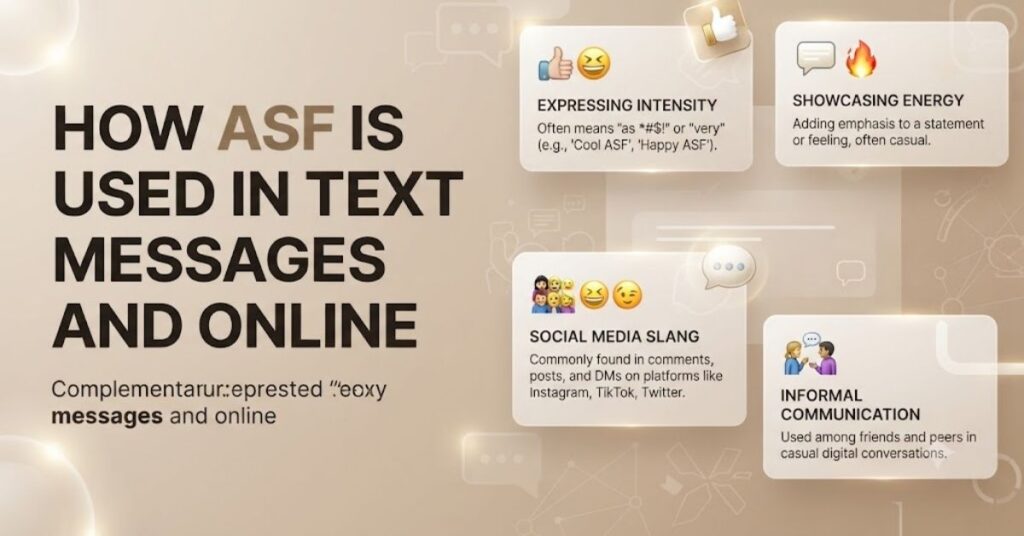
ASF appears mostly in casual conversations where people want to add extra emotion. It is not usually used in serious or professional communication.
People commonly use ASF in:
- Text messages
- Group chats
- Social media captions
- Comments and reactions
- Gaming conversations
- Online communities
The purpose is simple. ASF makes a statement feel stronger.
Examples:
Friend: “How was the concert?”
Reply: “It was amazing ASF.”
Meaning: The concert was extremely amazing.
Friend: “How are you feeling?”
Reply: “I’m tired ASF.”
Meaning: The person feels very tired.
Common Contexts
ASF can appear in many different situations.
Positive usage:
- “That song is catchy ASF.”
- “Your photos look beautiful ASF.”
Negative usage:
- “This traffic is annoying ASF.”
- “That exam was hard ASF.”
Neutral intensifier:
- “The room is cold ASF.”
The meaning depends on tone interpretation and context-based meaning.
While ASF is popular in online communication, users should understand where it fits. It works in casual conversations but does not belong in academic settings, professional emails, or formal writing.
Examples of ASF in Real Conversations
Real examples make slang easier to understand. ASF usually appears naturally when people want to show stronger emotions.
The meaning becomes clear when you look at the complete conversation.
Casual Texting
Friend 1: “Did you watch that new movie?”
Friend 2: “Yeah, it was funny ASF.”
Meaning: The movie was extremely funny.
Friend 1: “How was your workout?”
Friend 2: “Hard ASF, but I finished.”
Meaning: The workout was very difficult.
Friend 1: “Are you ready for tomorrow?”
Friend 2: “Nervous ASF.”
Meaning: The person feels extremely nervous.
ASF makes casual texting feel more expressive. Friends often use it because it quickly shows emotional intensity without writing a long sentence.
Social Media
On platforms like TikTok, Instagram, and Snapchat, ASF appears frequently in captions and comments.
Examples:
- “This outfit is fire ASF 🔥”
- “That video was funny ASF 😂”
- “This view is beautiful ASF 🌅”
Creators often use ASF because it fits the fast style of social media captions.
It helps users express reactions quickly while keeping posts short and engaging.
Memes
ASF is also common in memes and viral content. Meme culture often uses exaggerated language to make jokes stronger.
Examples:
- “Me waiting for Friday to come. Tired ASF.”
- “When your friend says they’re five minutes away but arrives an hour later. Annoyed ASF.”
Memes use ASF because it adds humor and makes emotions feel bigger.
This slang term has become a regular part of online jokes, reactions, and trending captions.
Different Ways ASF Can Be Interpreted
The meaning of ASF can change depending on the conversation, tone, and platform. While the most common asf meaning in text is “as f***,” people use it in different ways online.
ASF usually works as an intensifier. It adds extra power to the word before it.
For example:
- “Funny ASF” = extremely funny
- “Busy ASF” = very busy
- “Cold ASF” = extremely cold
However, you should always check the context before understanding the meaning. A simple phrase can have different emotions behind it.
ASF can show:
- Excitement
- Frustration
- Surprise
- Humor
- Strong opinions
The same slang term may sound positive in one message and negative in another.
Common Interpretations
Here are the most common ways people understand ASF:
1. Strong emphasis
ASF often means “very” or “extremely.”
Example:
“Her dance moves are amazing ASF.”
Meaning: Her dance moves are extremely amazing.
2. Emotional expression
People use ASF to show strong feelings.
Example:
“I miss summer ASF.”
Meaning: The person really misses summer.
3. Casual internet slang
ASF is part of social media slang used in informal spaces.
You may see it on:
- TikTok
- Twitter/X
- Snapchat
- Group chats
Understanding the surrounding words helps you understand the true meaning behind ASF.
Is ASF Offensive or Rude?
ASF can be considered informal because it comes from a phrase containing profanity. However, whether it sounds rude depends on the situation and the people involved.
Among friends, ASF is often normal. Many people use it casually without trying to offend anyone.
For example:
“That pizza was good ASF.”
This usually sounds like a positive reaction.
However, ASF may not be suitable in every environment.
Avoid using ASF in:
- Professional emails
- Job applications
- Academic settings
- Formal writing
- Business communication
The phrase can create a negative impression if the audience expects polite language.
Read More: What Does IDM Mean in Text? Complete Slang Guide 2026
Short Answer: It Depends
ASF is not always offensive. The meaning depends on:
- Who says it
- Who receives it
- The topic of the conversation
- The platform being used
- The overall tone
Examples:
Friendly use:
“Your new haircut looks good ASF.”
This is a compliment.
Negative use:
“This traffic is slow ASF.”
This shows frustration.
Professional situation:
“I completed the report ASF.”
This would sound inappropriate.
ASF belongs mostly in casual conversation and online spaces. Knowing when to use it is important for clear communication.
Common Misunderstandings About ASF Meaning in Text
Many people misunderstand ASF because internet slang changes quickly. Some users see the abbreviation and assume it always has one meaning.
The truth is different. The asf meaning in text depends on context.
Like many slang terms, ASF has different interpretations among different groups.
Some common misunderstandings include:
- Thinking ASF is always an insult
- Assuming it always sounds negative
- Believing every use has the same meaning
Understanding slang requires looking at the full message.
For example:
“Your artwork is beautiful ASF.”
This is clearly a compliment.
“This homework is confusing ASF.”
This expresses frustration.
The same abbreviation creates different feelings depending on the sentence.
Myth 1: ASF Is an Insult
Many people believe ASF is always negative because it contains profanity. That is not true.
ASF often appears in positive statements.
Examples:
- “You’re talented ASF.”
- “That performance was amazing ASF.”
- “This place looks beautiful ASF.”
In these examples, ASF strengthens praise.
It works like adding “really” or “extremely” to a sentence.
However, ASF can also appear in complaints.
Example:
“This weather is hot ASF.”
The speaker is not insulting anyone. They are simply expressing a strong feeling.
Myth 2: ASF Always Refers to Profanity
ASF comes from “as f***,” but many users focus more on the expression than the original phrase.
In online communication, people often shorten words to make messages faster.
Examples of similar shortcuts include:
- LOL = Laugh Out Loud
- BRB = Be Right Back
- IMO = In My Opinion
ASF follows the same pattern of digital communication.
Some users even write it as “AF” to avoid stronger language.
Both forms usually serve the same purpose:
- Adding emphasis
- Showing emotion
- Making a statement stronger
Still, because ASF connects with profanity, users should consider their audience before using it.
Myth 3: ASF Has Multiple Meanings
ASF can have other meanings in different fields. However, in online slang and texting, the most common meaning is “as f***.”
Some people confuse ASF with other abbreviations because many short forms exist online.
For example:
- SS meaning can vary depending on context
- WTV meaning usually means “whatever”
- PH meaning can have different interpretations
The meaning of any abbreviation depends on where you see it.
When ASF appears in:
- A TikTok comment
- An Instagram caption
- A text message
- A meme
it usually refers to the slang expression used for emphasis.
Context always matters in modern digital language.
ASF vs Similar Slang Terms
ASF belongs to a larger group of internet slang terms that people use to add emotion and emphasis.
Many users compare ASF with similar expressions like AF.
| Slang Term | Meaning | Usage |
| ASF | As f*** | Strong emphasis in casual chats |
| AF | As f*** | Shorter version of ASF |
| LOL | Laugh Out Loud | Shows humor |
| IMO | In My Opinion | Shares a viewpoint |
| BRB | Be Right Back | Shows temporary absence |
ASF and AF both work as intensifiers.
Examples:
- “This game is hard ASF.”
- “This game is hard AF.”
Both sentences mean the game is extremely difficult.
However, ASF appears more often in some online communities because users find it visually stronger and more expressive.
These slang terms show how online communication keeps changing. People create shorter ways to share emotions quickly.
Why Do People Use ASF Instead of AF?

Many people use ASF instead of AF because it feels more expressive and noticeable in online conversations. Both terms usually have the same meaning, but ASF has become a popular choice in modern digital language.
The extra letters can make the phrase feel stronger. It adds more personality to messages, captions, and comments.
For example:
- “This song is good AF.”
- “This song is good ASF.”
Both mean the same thing, but the second version often feels more dramatic.
People choose ASF because:
- It matches casual texting styles
- It feels more emotional
- It works well in memes and captions
- It fits Gen Z communication habits
- It adds extra emphasis in text
Like many internet slang terms, ASF became popular because users wanted faster and more creative ways to express feelings.
Reasons ASF Is Popular
ASF gained popularity through social media platforms and online communities. Apps with short posts and quick reactions helped spread this slang term.
Some major reasons include:
1. Strong emotional expression
People use ASF when normal words do not feel strong enough.
Example:
“This concert was amazing ASF.”
The speaker wants to show extreme excitement.
2. Social media influence
TikTok, Instagram, Twitter/X, and Snapchat helped ASF become common. Users often add slang terms to make captions and comments more relatable.
3. Meme culture
Memes often use exaggerated emotions. ASF fits perfectly because it makes reactions sound bigger and funnier.
4. Faster communication
Text abbreviations save time. Instead of typing a long sentence, users can quickly show their feelings.
ASF has become part of online communication trends because it combines speed, emotion, and humor.
How to Use ASF Correctly
Using ASF correctly means understanding the situation before adding it to your sentence. Since ASF is informal slang, it works best in relaxed conversations.
You can use ASF with friends, online communities, and social media posts. However, it may not fit serious situations.
ASF usually comes after an adjective or description word.
Examples:
- “This food is delicious ASF.”
- “I’m tired ASF.”
- “That joke was funny ASF.”
The word before ASF receives extra emphasis.
ASF should not replace clear communication. It works as an emotional addition, not as the main meaning of a sentence.
Best Practices
Follow these tips when using ASF:
- Use it with friends and people who understand slang.
- Check the tone before sending it.
- Avoid using it in formal conversations.
- Consider your audience.
- Remember that it contains profanity.
Good places to use ASF:
✅ Casual texting
✅ Group chats
✅ Social media captions
✅ Comments and reactions
✅ Friendly conversations
Places to avoid ASF:
❌ Professional emails
❌ Business messages
❌ Academic writing
❌ Formal documents
The right usage depends on context. A phrase that sounds funny between friends may sound unprofessional at work.
Examples
Here are some natural examples of ASF in conversations:
Example 1:
Friend: “How was your vacation?”
You: “It was relaxing ASF.”
Meaning: The vacation was extremely relaxing.
Example 2:
Friend: “Did you like the new game?”
You: “Yeah, it’s fun ASF.”
Meaning: The game is very fun.
Example 3:
Comment: “This picture is beautiful ASF 🔥”
Meaning: The picture is extremely beautiful.
Example 4:
Friend: “How was your exam?”
You: “Hard ASF.”
Meaning: The exam was extremely difficult.
ASF works best when it feels natural. Using it too often can make your messages feel repetitive.
Read More: Fein Meaning: Complete Breakdown of Viral Internet Slang 2026
Alternatives to ASF (If You Want to Keep It Clean)
Not everyone feels comfortable using profanity-based slang. Sometimes you want to express strong feelings without using ASF.
Luckily, there are many clean alternatives that give a similar meaning.
You can replace ASF with words like:
- Very
- Extremely
- Really
- Super
- Seriously
- Totally
- Incredibly
Examples:
Instead of:
“This movie is good ASF.”
You can say:
- “This movie is extremely good.”
- “This movie is really good.”
- “This movie is seriously amazing.”
These options work better in formal writing and professional communication.
Clean alternatives are useful for:
- School assignments
- Workplace messages
- Public posts
- Professional profiles
The goal is the same: showing strong emotion without using informal language.
Understanding different choices helps you communicate better in different situations.
ASF in Pop Culture and Social Media
ASF has become a noticeable part of pop culture and online conversations. It appears frequently in memes, captions, comments, and viral posts.
Social media users often use ASF to make reactions stronger and more entertaining. It fits naturally into platforms where people share quick opinions and emotions.
You may see ASF in:
- TikTok videos
- Instagram captions
- Twitter/X posts
- Snapchat messages
- Meme pages
The slang term connects with the fast style of modern online communication.
Trending Usage
ASF often appears with popular topics, reactions, and online trends.
Examples:
- “This trend is funny ASF.”
- “That outfit is stylish ASF.”
- “This song is catchy ASF.”
Creators use ASF because it makes content feel more casual and relatable.
It also helps users connect with online communities that understand similar slang.
However, trending language changes quickly. A slang term that feels popular today may become less common later.
ASF remains widely recognized because it has become part of internet slang and digital culture.
Can ASF Be Used Positively?
Yes, ASF can be used positively in many online conversations. Although the phrase includes profanity, people often use it to show excitement, admiration, or strong appreciation.
The asf meaning in text is not always negative. The emotion depends on the words around it and the situation where someone uses it.
For example:
- “Your artwork is beautiful ASF.”
- “That song is catchy ASF.”
- “Your cooking is amazing ASF.”
In these examples, ASF works as a positive intensifier. It makes the compliment stronger and shows genuine excitement.
People often use ASF positively in:
- Friendly conversations
- Social media captions
- Comments
- Memes
- Group chats
It helps users express emotions quickly without writing long explanations.
Positive Examples
Here are some common positive uses of ASF:
Example 1:
Friend: “Did you like my new outfit?”
Reply: “Yeah, it looks stylish ASF.”
Meaning: The outfit looks extremely stylish.
Example 2:
Comment: “This photo is beautiful ASF.”
Meaning: The photo looks very beautiful.
Example 3:
Friend: “I finally passed my exam!”
Reply: “That’s amazing ASF!”
Meaning: The achievement feels extremely amazing.
ASF can make conversations feel more energetic and expressive. However, users should remember that it remains informal slang. It works best with people who understand casual internet language.
Who Uses ASF the Most?
ASF is mostly used by people who spend a lot of time communicating online. Younger internet users often use it because they are familiar with fast-changing slang terms.
Gen Z users frequently use ASF on platforms where short and expressive messages are common. Millennials also understand and use it, especially in casual online conversations.
You may find ASF among:
- Teenagers
- Young adults
- Social media creators
- Online communities
- Gaming groups
Platforms like TikTok, Instagram, Snapchat, and Twitter/X have helped spread ASF among millions of users.
The popularity of ASF comes from its ability to express strong emotions quickly.
For example:
Instead of typing:
“I am extremely tired today.”
Someone might write:
“I’m tired ASF.”
This shorter style matches modern digital communication.
ASF is part of a bigger trend where people use abbreviations and slang to make conversations faster and more personal.
Is ASF Still Popular in 2025?
Yes, ASF remains popular in 2025, especially in casual online spaces. While internet slang changes quickly, ASF continues to appear in comments, captions, memes, and private messages.
Its popularity comes from how easily it fits into modern conversations. People use it to add emotion without writing long sentences.
ASF continues to appear on:
- TikTok videos
- Instagram captions
- Snapchat stories
- Twitter/X posts
- Meme pages
Social media trends often influence how slang spreads. When creators and users repeat a phrase, it becomes part of everyday online language.
However, slang popularity can vary between communities. Some users may prefer newer expressions while others continue using ASF.
ASF remains recognizable because it has a simple purpose: adding extra emphasis.
FAQs
What does ASF mean in text?
ASF means as f*** in chats and online slang. The asf meaning in text shows strong emphasis or extreme feelings.
Is ASF a bad word?
ASF contains profanity, so it may sound rude. Use it carefully because context and audience decide the meaning.
What does ASF mean on TikTok?
On TikTok, ASF adds extra emotion to captions and comments. The asf meaning in text often shows excitement or reactions.
What does ASF mean on Instagram?
Instagram users use ASF in captions and comments for emphasis. It helps express strong emotions in casual posts.
Is ASF the same as AF?
ASF and AF have similar meanings in slang. Both work as intensifiers to make words sound stronger.
Can ASF be used professionally?
No, ASF is not suitable for professional emails or formal writing. Use cleaner words in workplace communication.
Why do people use ASF?
People use ASF because it quickly shows strong emotions. The asf meaning in text helps add impact to messages.
What are examples of ASF in texting?
Examples include tired ASF, funny ASF, and happy ASF. These phrases show very strong feelings in casual chats.
Who uses ASF the most?
Gen Z and online communities commonly use ASF. It appears often in social media slang and casual conversations.
Is ASF still popular today?
Yes, ASF remains popular on TikTok, Instagram, and memes. The slang continues in modern digital communication.
Does ASF always have the same meaning?
No, ASF depends on context and tone. The asf meaning in text changes based on how people use it.
What are clean alternatives to ASF?
You can use extremely, very, or really instead of ASF. These words work better in formal situations.
Where did ASF slang come from?
ASF developed through internet slang and online communication. It became popular through social media platforms and memes.
Can ASF be positive?
Yes, ASF can express positive feelings too. People use it to show excitement, praise, or admiration.
What does ASF stand for in texting?
ASF usually stands for as f*** in texting. It works as an intensifier for stronger expressions.
Conclusion
Understanding ASF meaning in text helps you follow modern online conversations easily. This slang term appears in chats, memes, comments, and social media posts. The ASF meaning in text usually refers to a phrase used for strong emphasis. People use it to express extreme feelings, reactions, or opinions in casual communication.
The ASF meaning in text depends on the context and tone of the conversation. It can show excitement, humor, frustration, or praise. While ASF is common on TikTok, Instagram, and other platforms, it may not fit formal writing or professional messages. Knowing when to use ASF helps you communicate better. The ASF meaning in text is simple, but understanding its proper usage makes online conversations clearer and more natural.