
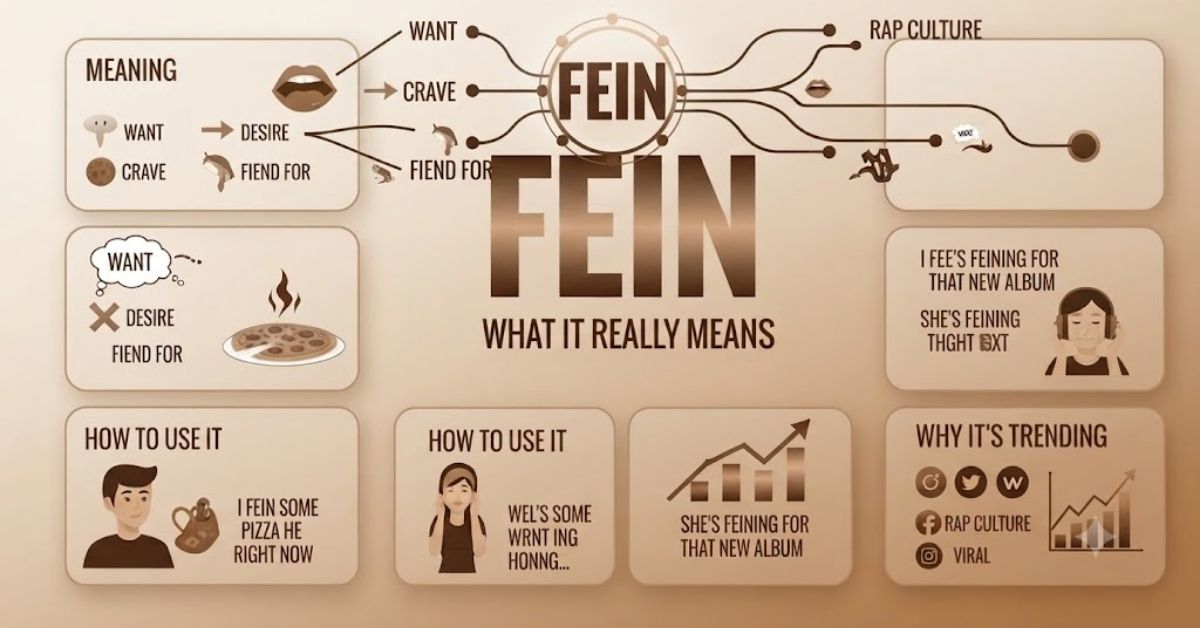
Have you ever seen the word “fein” in a viral video, song lyric, or comment and wondered what it actually means? Internet slang changes quickly, and new words can spread across platforms overnight. From TikTok trends to Instagram Reels, this term has become a common part of online conversations. Many people use it daily without knowing where it came from or how its meaning changes.
The word is connected to strong interest, obsession, or a powerful craving for something. However, its meaning depends on the situation, tone, and context. Whether you find it in text messages, memes, gaming chats, or social media captions, understanding this popular slang helps you keep up with modern internet culture and Gen Z slang.
What Does “Fein” Mean in Slang?
The fein meaning in slang usually describes someone who has a strong desire, obsession, or deep interest in something. It comes from the older word “fiend” but has changed through internet culture.
People often use “fein” in a playful way. It does not always describe a serious addiction. Most of the time, it shows excitement or a strong craving for something.
For example, someone who loves coffee might say they are a “coffee fein.” A person who spends hours playing games may call themselves a “gaming fiend.”
The meaning depends on the situation, tone, and context.
Common uses include:
- A person obsessed with a hobby
- Someone who strongly wants something
- A fan who cannot get enough of something
- A playful way to describe a passion
Example conversation:
Alex: “You bought another pair of sneakers?”
Mike: “Yeah, I’m a sneaker fein. I can’t stop collecting them.”
Slang Definition of Fein:
In modern slang, “fein” means someone who is extremely interested in or craving something. It works like words such as:
- Obsessed
- Addict
- Fanatic
- Stan
- Enthusiast
The word appears often in online spaces like TikTok, Snapchat, Instagram Reels, and Twitter/X.
Unlike the original word “fiend,” the slang version often sounds more casual and humorous.
For example:
- “I’m a gym fein” means “I love working out a lot.”
- “She’s a fashion fein” means “She really loves fashion.”
- “He’s a food fein” means “He always wants good food.”
It is mostly used in casual conversation, texting culture, and social media posts.
Read More: 100+ Funny Chicken Puns That Will Make You Cluck With Laughter
Simple Examples of Fein in Slang
People use “fein” in many everyday situations. The word usually highlights a strong liking or craving for something.
Here are some simple examples:
- “I’m a coffee fein. I need my morning cup.”
- “He’s a gaming fein who plays every night.”
- “She’s a makeup fein and follows every beauty trend.”
- “My brother is a sneaker fein. His collection keeps growing.”
- “I’m a gym fein. I never miss a workout.”
The word can describe almost any strong interest.
Conversation examples:
Person 1: “Why do you watch that show every day?”
Person 2: “I’m a series fein. I need to know what happens next.”
Person 1: “You ordered pizza again?”
Person 2: “Yes, I’m a food fein. I can’t resist it.”
The meaning changes based on what comes before the word. A sneaker fein and a money fein both show strong interest, but the subject changes the meaning.
Why Do People Say “Fein” Instead of “Fiend”?
The change from “fiend” to “fein” happened because internet users love creating new spellings. Online communities often change words to make them look unique, shorter, or more stylish.
The spelling “fein” became popular through trend-driven spelling and modern slang culture.
Many Gen Z users prefer words that feel different from traditional English. These changes spread quickly through memes, songs, and viral trends.
The original meaning stayed similar, but the feeling became more casual.
For example:
Traditional:
- “He is a fiend for attention.”
Modern slang:
- “He’s an attention fein.”
Both describe someone who strongly wants something.
Reasons for the change:
Several factors helped “fein” replace “fiend” in some online spaces:
- Social media made new spellings spread faster.
- Music and viral content influenced language.
- Gen Z slang prefers creative expressions.
- Trend-driven spelling makes words feel fresh.
- Internet culture creates new meanings.
The spelling does not always follow standard English rules. That is common with internet slang.
Read Molre: 185+ Funny Pickleball Puns That Will Make You LOL
The Origin of the Word “Fiend” (Before Slang)
Before becoming internet slang, “fiend” had a much older history. The word originally came from Old English and referred to an enemy or evil person.
Over time, the meaning changed. People started using “fiend” to describe someone who had an extreme desire for something.
The word moved from a negative meaning to a more flexible expression.
Today, you might hear:
- Drug fiend
- Gaming fiend
- Food fiend
- Coffee fiend
The meaning depends on what comes after the word.
Traditional Meaning:
In older English, “fiend” often described:
- An evil creature
- A devil-like figure
- A dangerous person
- Someone harmful
For example:
“The story’s villain was described as a cruel fiend.”
This meaning sounds much more serious than modern slang.
Modern Slang Evolution:
Language changes as people use it in new ways. The word “fiend” slowly became connected with strong interests and habits.
Today, it can describe someone who loves something deeply.
Examples:
- “She is a gym fiend.”
- “He is a movie fiend.”
- “They are a music fiend.”
The newer slang version “fein” follows this same idea but feels more connected to online communities, texting culture, and self-expression slang.
How “Fein” Became Popular Online
The rise of “fein” shows how quickly internet slang can spread. A word can move from a small online group to millions of users in a short time.
Music, memes, and social media platforms helped this slang grow. Many people discovered it through viral content rather than traditional language sources.
The word became especially noticeable among younger users who follow Gen Z slang trends.
Platforms where “fein” is trending:
You can find “fein” across many online platforms, including:
- TikTok: Used in videos, comments, and trends.
- Instagram Reels: Appears in captions and viral clips.
- Snapchat: Used in casual chats with friends.
- Twitter/X: Seen in jokes and discussions.
- YouTube comments: Fans use it while reacting to content.
These platforms help internet slang reach English-speaking online communities worldwide.
Why it went viral:
Several reasons helped “fein” become popular:
- Viral music references increased awareness.
- Meme culture made the word more common.
- Short videos spread slang quickly.
- Users enjoy creative language.
- Online jokes gave the word new life.
The popularity of “fein” shows how internet culture constantly shapes everyday communication. A single word can become a global trend when millions of people start using it.
Different Ways “Fein” Is Used in Conversations
The word “fein” can have different meanings depending on the situation. People usually use it to describe a strong interest, craving, or obsession with something.
It does not always sound serious. In many cases, people use it as a joke or a fun way to describe their habits.
The fein meaning changes with the person, topic, and tone of the conversation.
For example, someone can be a coffee fein because they love coffee. Another person can be a gaming fein because they spend a lot of time playing games.
Common uses include:
- Showing excitement about something
- Describing a personal passion
- Making jokes about habits
- Highlighting someone’s obsession
1. Funny or Playful
Many people use “fein” in a funny way. It adds humor to normal conversations.
Instead of saying, “I really like this,” someone might say, “I’m a fein for this.”
It makes the statement sound more dramatic and entertaining.
Examples:
- “I’m a chocolate fein. I can finish a whole box.”
- “She’s a shopping fein during every sale.”
- “He’s a movie fein. He watches films every weekend.”
Conversation example:
Sarah: “Why do you keep buying coffee every morning?”
Emma: “Because I’m a coffee fein. It’s my daily happiness.”
In these situations, the word does not suggest a harmful addiction. It simply shows strong enjoyment.
2. Teasing Someone
People also use “fein” when they want to playfully tease friends.
It can point out someone’s habits without sounding rude.
For example, if someone always talks about a celebrity, friends may call them a fan fein.
Examples:
- “You watched that artist’s new video ten times? You’re a music fein.”
- “Another sneaker purchase? You’re definitely a sneaker fein.”
Conversation example:
Tom: “I bought my fifth pair of sneakers this month.”
Jake: “Bro, you’re a sneaker fein.”
This type of usage is common in texting culture and casual conversation.
3. Calling Out Obsession
Sometimes, “fein” describes a person who has an extreme interest in something.
It connects with ideas like obsession, craving, or being unable to stop thinking about something.
However, the meaning usually stays informal.
Examples:
- A gym fein loves fitness and workouts.
- A gaming fiend spends many hours playing games.
- A food fein always searches for new dishes.
The word highlights strong dedication.
Conversation example:
Lisa: “Mark knows every detail about that game.”
Anna: “He’s a gaming fein. He never stops playing.”
The tone decides whether it sounds like praise or criticism.
4. Self-Expression
Modern slang helps people express their personality. “Fein” has become part of online self-expression.
People use it in captions, usernames, comments, and posts to show their interests.
Examples:
- “Coffee fein forever ☕”
- “Fitness fein mode activated 💪”
- “A sneaker fein never stops shopping 👟”
This usage connects with internet slang, meme culture, and Gen Z slang.
It allows people to describe themselves in a short and creative way.
Positive vs Negative Meaning of Fein
The meaning of “fein” can be positive or negative. Everything depends on the tone and context.
In most online conversations, people use it in a positive or playful way.
For example:
- “She’s a book fein” means she loves reading.
- “He’s a gym fein” means he enjoys fitness.
These examples show passion, not a problem.
However, some situations can make the word sound negative.
Examples:
- “Drug fiend” describes someone with a serious addiction problem.
- “Money fein” may describe someone who focuses too much on wealth.
- “Attention fein” can suggest someone always seeks attention.
Positive Uses:
“Fein” can show:
- Passion
- Dedication
- Excitement
- Strong interest
- Personal hobbies
Examples:
- Coffee fein
- Gaming fein
- Fashion fein
- Fitness fein
These uses are usually friendly.
Negative Uses:
In some cases, it can suggest unhealthy behavior.
Examples:
- Drug fiend
- Attention fein
- Someone obsessed with money
The difference comes from the subject and the speaker’s intention.
A person saying “I’m a coffee fein” sounds playful. A person saying “he’s an attention fein” sounds critical.
Read More: 240+ Funny Insurance Puns and Jokes to Keep You Fully Covered
Fein vs Fiend: What’s the Difference?
“Fein” and “fiend” look similar because they come from the same idea. However, they are used differently today.
The original word is fiend. It has existed in English for centuries.
The newer spelling “fein” became popular through internet culture and slang.
| Word | Meaning | Common Use |
| Fiend | Someone with an intense desire or old meaning of enemy/evil person | Traditional English |
| Fein | Modern slang spelling for strong interest or obsession | Social media and casual chats |
Examples:
Traditional:
“He was called a fiend in the old story.”
Modern slang:
“She’s a makeup fein.”
The pronunciation is often similar, but the feeling changes.
“Fiend” sounds more formal. “Fein” feels more connected to online conversations.
Common Misunderstandings About “Fein”
Many people misunderstand this slang because they only see it online. Since language changes quickly, words can develop new meanings.
The fein meaning is not always the same in every situation.
Here are common mistakes people make.
Misconception 1: It’s a New Word
Some people think “fein” was recently created.
Actually, it comes from the older word “fiend.”
The spelling changed because of online trends and modern slang evolution.
Internet users often modify words to create a unique style.
Examples:
- Fein
- Fien
- Feen
These variations appear in different online communities.
Misconception 2: It Always Means Addiction
Another common mistake is thinking “fein” always refers to addiction.
That is not true.
Sometimes it describes a simple interest.
Examples:
- Coffee fein = loves coffee
- Gaming fein = loves gaming
- Sneaker fein = loves sneakers
The word only suggests addiction when the context clearly points toward it.
Misconception 3: It’s Offensive
Some people believe “fein” is always rude.
In reality, it depends on how someone uses it.
Friendly example:
“You’re a pizza fein.”
Negative example:
“He’s an attention fein.”
The first one is playful. The second one criticizes someone’s behavior.
Always consider the tone and context before judging the meaning.
When Should You Use “Fein”?
You can use “fein” when you want to describe a strong interest, passion, or craving for something. It works best in casual situations where people understand internet slang.
This word fits naturally in conversations with friends, social media posts, comments, and text messages.
It adds a playful feeling to your sentence.
For example:
- “I’m a coffee fein. I need coffee every morning.”
- “She’s a fashion fein who follows every trend.”
- “He’s a gaming fein and loves new releases.”
The word is common in online spaces, especially among people who use Gen Z slang.
However, you should always think about the situation before using it.
Avoid using it in:
Although “fein” is popular online, it does not fit every situation.
Avoid using it in:
- Professional emails: Business communication should stay clear and formal.
- Academic writing: School papers require standard English.
- Job interviews: Slang may sound too casual.
- Official documents: Use professional words instead.
For example:
❌ “I’m a marketing fein who loves sales.”
✅ “I’m passionate about marketing and sales.”
The word works well for personal expression but not formal writing.
Synonyms and Similar Slang Words
Several words have a similar meaning to “fein.” These words describe someone who strongly likes, wants, or focuses on something.
The best choice depends on the tone of your sentence.
Common alternatives include:
- Addict: Someone who cannot stop doing or using something.
- Obsessed: Extremely interested in something.
- Fanatic: Someone with strong passion.
- Junkie: Informal word for someone who wants something a lot.
- Stan: A slang word for a very dedicated fan.
- Enthusiast: Someone who enjoys a hobby.
Examples:
- “She’s a sneaker fein.”
- “She’s obsessed with sneakers.”
- “She’s a sneaker fanatic.”
All three sentences show strong interest, but the feeling changes slightly.
“Fein” sounds more casual and connected to internet slang.
Real-Life Use Cases of “Fein”
People use “fein” in many everyday situations. The word appears in conversations, social media captions, and online communities.
It often describes hobbies, habits, and personal interests.
| Type | Example Meaning |
| Coffee fein | Someone who loves coffee |
| Gaming fein | Someone who enjoys video games |
| Sneaker fein | Someone who collects sneakers |
| Gym fein | Someone passionate about fitness |
| Food fein | Someone who loves trying food |
| Money fein | Someone focused heavily on money |
| Attention fein | Someone who seeks attention |
Social Media Caption Examples:
People often use “fein” in captions to show personality.
Examples:
- “Coffee fein forever ☕”
- “Weekend gaming fein mode 🎮”
- “Certified sneaker fein 👟”
- “Food fein exploring new flavors 🍔”
- “Gym fein never skips a workout 💪”
These captions use the word in a fun way.
They connect with internet culture, self-expression slang, and viral trends.
Text Message Examples:
Friends often use “fein” while chatting.
Example 1:
Jake: “Why do you keep buying shoes?”
Mike: “Because I’m a sneaker fein 😂”
Example 2:
Amy: “You finished that whole pizza?”
Sara: “I’m a food fein. What did you expect? 😄”
Example 3:
Chris: “You played that game all night?”
David: “I’m a gaming fein. I couldn’t stop.”
These examples show how the word feels natural in casual conversations.
Is “Fein” a Trend or Here to Stay?
Slang words often appear quickly and disappear just as fast. However, some words become part of everyday online language.
“Fein” has gained attention because it connects with social media, music, and modern communication.
Its popularity grew through viral trends, memes, and online communities.
The word also fits how people communicate today. Short, expressive words work well on platforms like TikTok, Instagram Reels, Snapchat, and Twitter/X.
Several reasons may help “fein” continue:
- It is easy to understand.
- It expresses strong feelings quickly.
- It fits meme culture.
- Young users enjoy creative spelling.
- It works across different interests.
However, slang always changes. New words may replace it in the future.
For now, “fein” remains a recognizable part of modern internet slang.
How to Use Fein Correctly (Quick Tips)
Using “fein” correctly is simple when you understand the meaning and context.
Follow these quick tips:
1. Use it for strong interests
Good examples:
- “I’m a coffee fein.”
- “He’s a gaming fein.”
- “She’s a music fein.”
2. Match the tone
A playful conversation can handle slang.
A serious situation may need more formal words.
3. Understand the context
The same word can sound positive or negative.
Positive:
“Your sister is a book fein.”
Negative:
“He’s an attention fein.”
4. Avoid formal situations
Do not use “fein” in:
- Professional emails
- Academic writing
- Business reports
Use simple and clear language instead.
5. Remember it is slang
“Fein” belongs to casual speech and online communication.
It is part of how internet culture changes language. Like other slang terms such as IDC meaning, JS meaning, and HMJ meaning, its use depends on the community and conversation.
When you understand the audience, tone, and situation, you can use “fein” naturally and confidently.
FAQs
What is the fein meaning in slang?
The fein meaning refers to strong interest, obsession, or craving for something in casual online conversations and modern slang.
Is fein the same as fiend?
Fein comes from fiend, but modern slang uses it to describe strong interests in a more playful way.
Where did the word fein come from?
Fein evolved from the older word fiend, which originally described someone with extreme desire or obsession.
Is fein a positive or negative word?
The fein meaning can be positive or negative depending on the tone, context, and situation where people use it.
How is fein used on TikTok?
TikTok users use fein to describe strong interests, funny habits, and viral trends in creative videos.
Can fein be used in text messages?
Yes, fein appears in text messages as casual slang among friends and online communities.
What does sneaker fein mean?
Sneaker fein describes someone who loves sneakers, collects shoes, or follows sneaker trends with passion.
Conclusion
Understanding the fein meaning helps you follow modern internet slang and online conversations. This word describes a strong interest, craving, or obsession with something. People use it in casual chats, TikTok videos, Instagram Reels, and social media captions. The fein meaning can change based on the tone and context. It may sound funny, positive, or sometimes negative.
The fein meaning comes from the older word fiend, but internet culture gave it a fresh style. Today, people use fein for hobbies, trends, and personal interests. Whether someone is a coffee fein, gaming fein, or sneaker fein, the word shows passion. Learning the fein meaning makes it easier to understand Gen Z slang and modern texting culture. It is a simple word with a changing digital story.